ESI's Industrial Tool Rentals & Sales

Enerteq Solutions Inc. DBA ESI Flange Spreader Rentals BBB Business Review

Flange Spreader Evolution

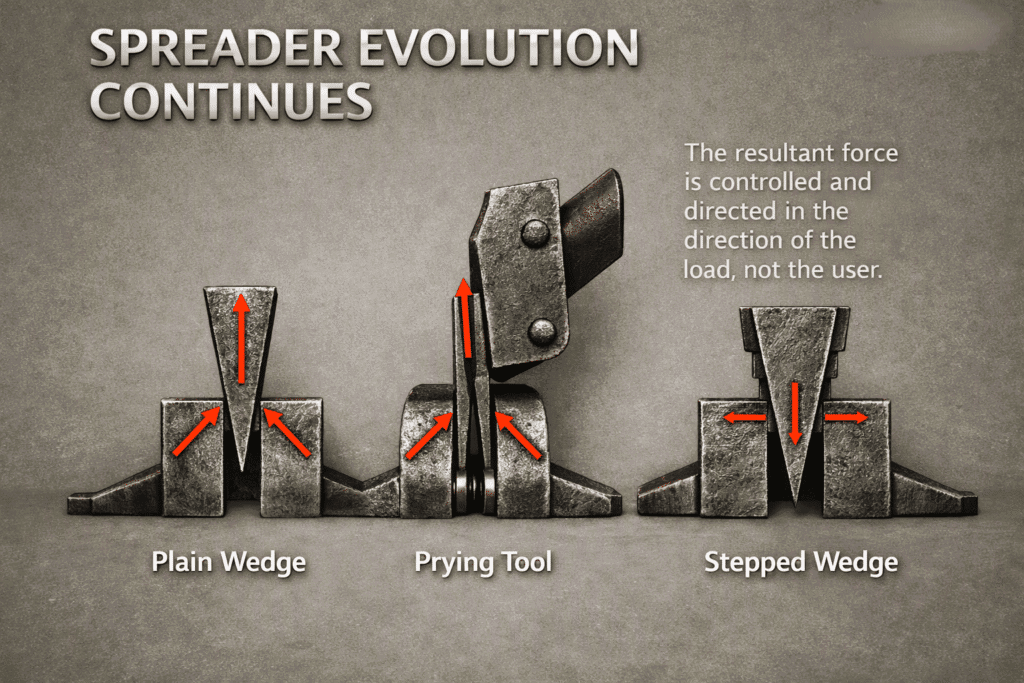
Flange spreader evolution diagram showing first two examples with forces in opposite directions, illustrating potential damage or gasket ejection.

Science and Technology's Role
in Modernizing Flange Maintenance 

Flange spreading has evolved from dangerous, brute‑force methods to advanced, precision‑engineered solutions. Early hammer‑driven wedges gave way to modern hydraulic flange spreaders, reflecting deeper knowledge of force vectors, friction, and material science.

Today, ESI flange spreading tools set the standard for safe, controlled joint separation. Designed for durability and ease of use, they make critical maintenance tasks safer and more efficient.

Continuous innovation has introduced technologies like zero‑gap spreaders, step wedges, and valve/spacer removal tools, all engineered to manage the unpredictable forces of pipeline maintenance. The goal remains clear: smart, safe, and reliable flange separation that protects workers while improving efficiency.


Flange Spreader Evolution: Traditional vs. Modern Technology

Traditional Tools & Methods

The journey of flange spreader evolution in achieving safe and efficient flange tooling has been extensive. It is rooted in a deep understanding of the physics governing the forces and energy involved. This evolution reflects a sensitivity to the safety concerns of workers who must complete their tasks securely before returning home. It stands as a testament to the engineering prowess behind designing and rigorously testing these devices until they reached proven reliability. Now, let’s explore some of the conventional methods used across industries, along with the potential risks associated with them.

Wooden Striking Wedge
Metal Striking Wedge

The Striking Wedge (Images Above): This method, despite its simplicity, carries inherent dangers. The use of a wooden or metal wedge, combined with a pry bar, can lead to serious injuries. The wedge can be forcefully ejected, and the pry bar can recoil, striking the worker.   Moreover, metal wedges can create sparks, posing an explosion risk in the presence of gas.

Metal Banana Wedge
Metal Banana Wedge
Banana Wedge
Banana Wedge

The Banana Wedge (Image Above): An advancement over the hammer-wedge, the Banana Wedge offered slight improvements but essentially presented the same geometrical force distribution and associated risks. 

Mechanical Pop It - Prying Tool
pop it flange spreader
Pop It Flange Spreader

The Prying Tool, depicted in the image above and the middle illustration, remains popular due to its simplicity and affordability. However, its reliance on a slender metal tongue is a design flaw that makes it highly susceptible to breakage and ejection, given the directional forces at play during flange spreading. 

Crowbar
Crowbar
Black and red crowbar isolated on white
Black And Red Crowbar Isolated On White

The Crowbar have been employed for separating joints and prying things open, there are indeed limitations and risks associated with their use. Crowbars’ slender ends allow them to fit into tight spaces, making them useful for prying. However, this very slimness can also be a drawback. It means that the force applied is concentrated over a small area, which can lead to localized damage or deformation. They’re sometimes used beyond their intended capacity. Applying excessive force can result in injury or damage.

Set of Flange Alignment Pins
Set Of Flange Alignment Pins
Flange Alignment Pin

Flange alignment pins are straightforward and widely used tools for aligning flanged joints. They resemble bolts, tapering to a pointed end. While they offer a safer and more efficient alternative to crowbars, they have notable limitations that can lead to significant challenges. These tools are both time-consuming and labor-intensive to use. Additionally, each bolt hole size requires a specific corresponding pin, making transportation between tasks cumbersome. Commonly reported issues include gasket damage, leaks, and joint failures.

Modern Tools and Methods

The evolution of flange spreader technology has been a lifesaver, revolutionizing the service industry like never before. This flange spreader evolution reflects the ongoing commitment of firms dedicated to protecting their workforce, always seeking superior technologies and reliable partners. At ESI, we stand firm in our pledge to safety, refusing to endorse tools that compromise worker security. Together, we can enhance the safety and efficiency of your team with trusted solutions that embody decades of engineering progress and proven reliability.


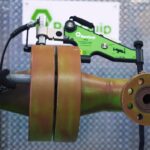
SWI1214TM Mechanical Step Wedge Flange Spreader
Mechanical Step Wedge Flange Spreader
SWI2025TE Hydraulic Step Wedge Flange Spreader seperating a flange.
Hydraulic Step Wedge Flange Spreader

The step wedge flange spreader is ingeniously designed to ensure safety and efficiency. Instead of exerting forces in opposing directions (north to south), it pushes the jaws from east to west. This clever arrangement eliminates the risk of incidents arising from conflicting forces.

VIPER28P seperating a flanged joint with field worker.
Viper28P Seperating A Flanged Joint With Field Worker.
SWI2025TI on a Flange
Swi2025Ti On A Flange

 The introduction of Step Wedge Flange Spreaders with Integral Pump, a brainchild of the now-defunct Equalizer International (now Enerpac) from the 1990s, has addressed nearly all the prevalent issues associated with flange spreading tasks. This technology is now widely recognized as the safest and most effective method for spreading flanges of any size and is gradually being adopted by new market players.

Zero Gap Mechanical Flange Spreader SG11TM
Zero Gap Mechanical Flange Spreader Sg11Tm
Zero Gap Low Pressure Mechanical Flange Spreader

 Perhaps the most revolutionary development was the, SG Flange Spreader series, bolt-hole spreading technology, also an Equalizer International innovation. This cutting-edge approach negates the need to insert any tools between the flange faces. Instead, it employs a set of collets within the bolt holes to latch onto the flanges, which are then separated using a clever lever or hydraulic cylinder mechanism.


Spacer Change Out Mainenance with Zero Gap Flange Spreader with Short Collet Holder Kits
Spacer Change Out Mainenance With Sg13Te Twin Kit.
Valve Removal Tool spreading a flange within the bolt holes
Valve Removal Tool Spreading A Flange Within The Bolt Holes

The Valve Removal Tool is a specialized instrument designed for operators who need to perform valve replacements with utmost precision and control.

AT4K Mechanical Flange Alignmentment tool on a flange
At4K Mechanical Flange Alignmentment Tool On A Flange
AT9K Hydraulic Flange Alignment Tool aligning a flange
Alignment Tools

This innovative design enables the tool to be placed into a specific bolt hole, with its wing extending to the neighboring flange. By harnessing gravitational forces, it realigns the pipes, turning a previously hazardous and labor-intensive task into a safer and more efficient process.

Available in both hydraulic and mechanical models, the tool accommodates joints of any size and significantly reduces the time required to complete the task.